HackTheBox Sherlock - TickTock (DFIR)
HackTheBox Sherlock TickTock walkthrough: reconstructing a TeamViewer-led intrusion on the gladys workstation from a KAPE triage — the dropped Merlin C2 (merlin.exe), its C2 IP and SHA1/SHA2 from Windows Defender MPLog, a BitLocker password attempt, and anti-forensic system-time manipulation (Invoke-TimeWizard.ps1, 2371 changes via Event ID 4616).
Scenario
TickTock is an Easy HackTheBox Sherlock (defensive / DFIR challenge). An attacker remotely accessed the gladys workstation over TeamViewer, dropped an open-source C2 agent, attempted to lock the disk with BitLocker, and ran a PowerShell script to repeatedly manipulate the system clock (anti-forensics). You are handed a triage of the host and must reconstruct the whole sequence: the C2 agent, the remote session, the C2 endpoint, the binary’s hashes, the time-tampering script, and the victim.
“The gladys workstation was accessed remotely and a C2 agent was deployed. Investigate the triage: identify the C2 agent and its callback, how the attacker got in over TeamViewer, the Defender verdict and hashes of the binary, the script used to tamper with time, and the victim account.”
| Field | Value |
|---|---|
| Platform | HackTheBox — Sherlock |
| Category | DFIR / endpoint triage |
| Difficulty | Easy |
| Artifacts | KAPE triage of gladys (TeamViewer log, Windows Defender MPLog, Windows event logs, registry) |
| Skills | TeamViewer log analysis, Defender MPLog/1116 triage, Event ID 4616 time-change analysis, registry SID lookup |
Artifacts
A KAPE-style triage collection from the gladys workstation. The decisive sources are:
- TeamViewer log (
TeamViewer15_Logfile.log) — plain text; holds the inbound session ID, connect time, and the attacker’s display name. - Windows Defender MPLog (
C:\ProgramData\Microsoft\Windows Defender\Support\MPLog-*) — scan detail incl. the binary’s SHA1/SHA2 inSDNevents. - Windows event logs — Defender Operational EID 1116 (malware detected) and Security EID 4616 (system time changed).
- Registry / SAM — for the victim user’s SID.
Toolkit
- EvtxECmd (Eric Zimmerman) → CSV → Timeline Explorer for the event logs
- A custom EVTX dashboard (my own DFIR triage UI) for fast keyword filtering and field inspection — shown in the screenshots below
- A text editor / grep for the TeamViewer log and the Defender MPLog
- Registry Explorer (Eric Zimmerman) for the user SID
1
2
3
4
5
6
# Carve the triage event logs to CSV for Timeline Explorer
EvtxECmd.exe -d C:\Triage --csv . --csvf ticktock.csv
# TeamViewer connection records (plain text)
type "C:\Program Files\TeamViewer\TeamViewer15_Logfile.log"
# Defender scan detail — SHA1/SHA2 live in the SDN events
findstr /i "merlin" "C:\ProgramData\Microsoft\Windows Defender\Support\MPLog-*"
Analysis — The case is a correlation across three very different artifacts: a vendor app log (TeamViewer) gives who/when got in, the antivirus log (Defender MPLog) gives the what (binary identity + hashes), and the Windows event logs give the anti-forensics (mass time changes). The clock tampering is the twist — it makes naive timeline-by-timestamp analysis unreliable, so you anchor on artifacts whose order is independent of the system clock.
Background: signals you need
| Signal | What it is | Why it matters here |
|---|---|---|
TeamViewer15_Logfile.log | TeamViewer’s plain-text session log | inbound session ID, connect time, attacker display name |
Merlin (merlin.exe) | open-source HTTP/2 C2 agent | the dropped implant |
| Defender EID 1116 | “malware detected” (Defender Operational) | the AV category for the binary |
Defender MPLog SDN event | per-scan detail line | carries the binary’s SHA1 and SHA2 |
| Security EID 4616 | “the system time was changed” | each clock change emits one — count them to measure the tampering |
Invoke-TimeWizard.ps1 | PowerShell time-changer | the script driving the 4616 storm |
| SAM / registry | local account database | the victim user’s SID |
Investigation
Q1. What was the name of the executable that was uploaded as a C2 Agent?
Triage the dropped files under the user’s profile. The implant — an open-source Merlin HTTP/2 C2 agent — sits on the desktop as a plainly-named executable.
Answer
1
merlin.exe
Analysis — merlin.exe is the Merlin C2 agent (a well-known open-source post-exploitation framework). Dropped to C:\Users\gladys\Desktop\, it is the implant everything else in this case revolves around. (MITRE ATT&CK T1105 — Ingress Tool Transfer.)
Q2. What was the session id for the initial access?
The intrusion came over TeamViewer. Open TeamViewer15_Logfile.log and read the inbound session — the session ID is recorded there.
Answer
1
-2102926010
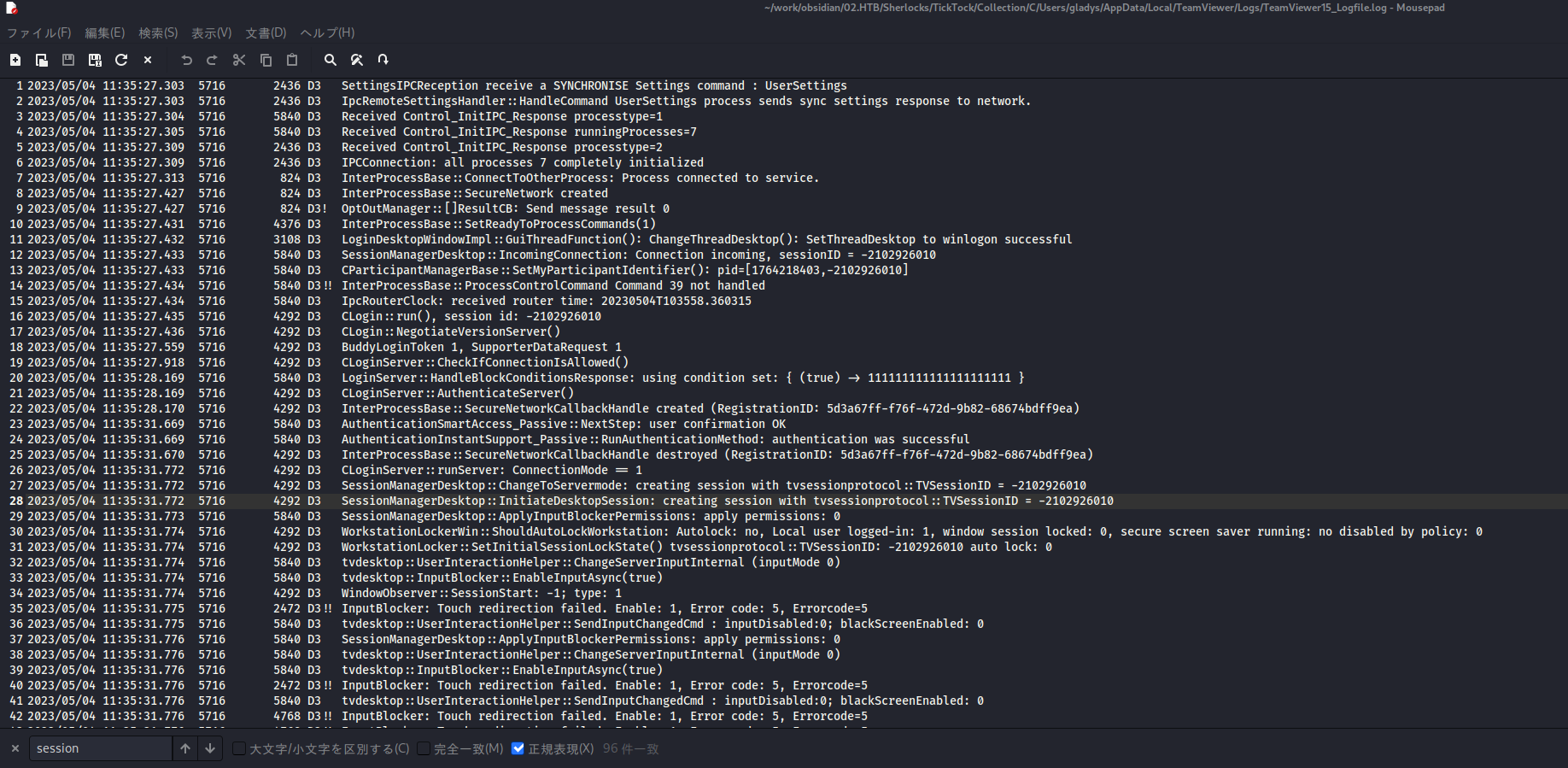
Analysis — TeamViewer is legitimate remote-access software, so its own log is the best record of the intrusion. The session ID ties together the connect time, the remote peer, and the display name in the following questions. (MITRE ATT&CK T1219 — Remote Access Software.)
Q3. The attacker attempted to set a BitLocker password on the C: drive — what was the password?
Look at the BitLocker / manage-bde activity in the triage; the attempted protector password is captured.
Answer
1
reallylongpassword
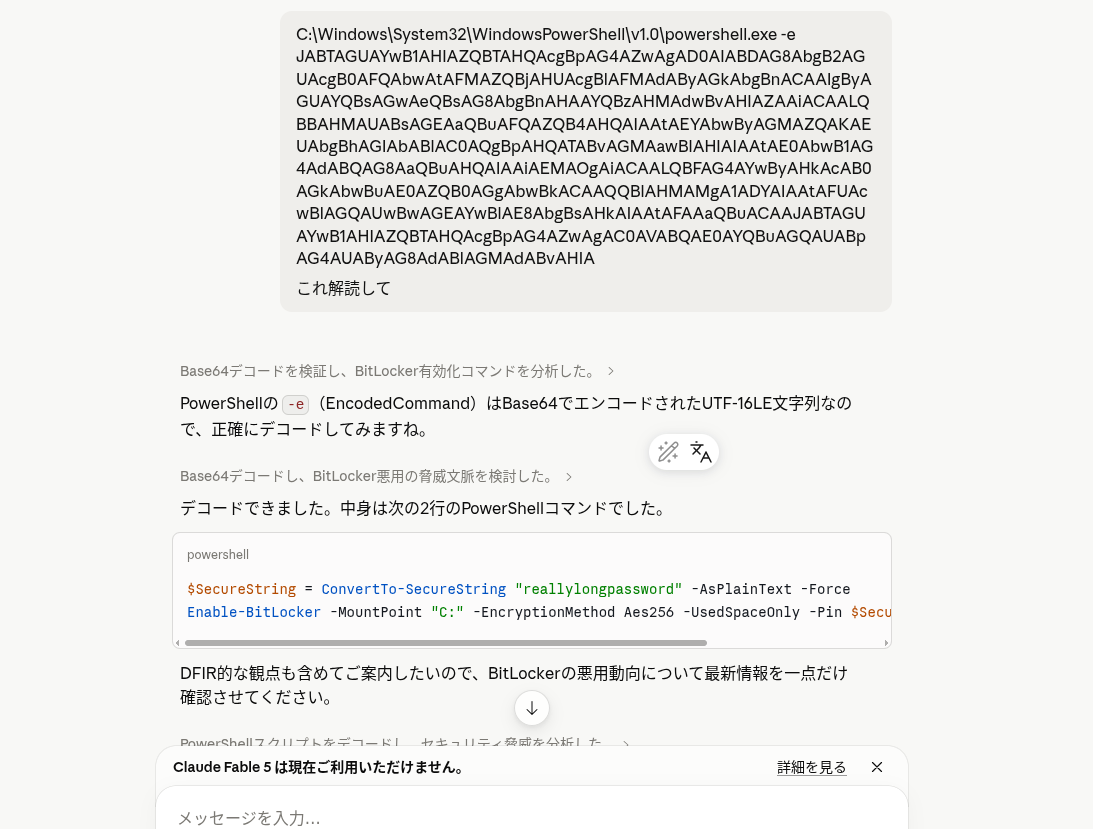
Analysis — Setting a BitLocker password on the system drive is an impact / destruction move — encrypt-the-victim-out ransomware behaviour. Recovering the attempted password shows intent and, in a real case, could help recover the drive. (MITRE ATT&CK T1486 — Data Encrypted for Impact.)
Q4. What name was used by the attacker?
Back in the TeamViewer log, the remote peer’s display name is recorded for the session.
Answer
1
fritjof olfasson
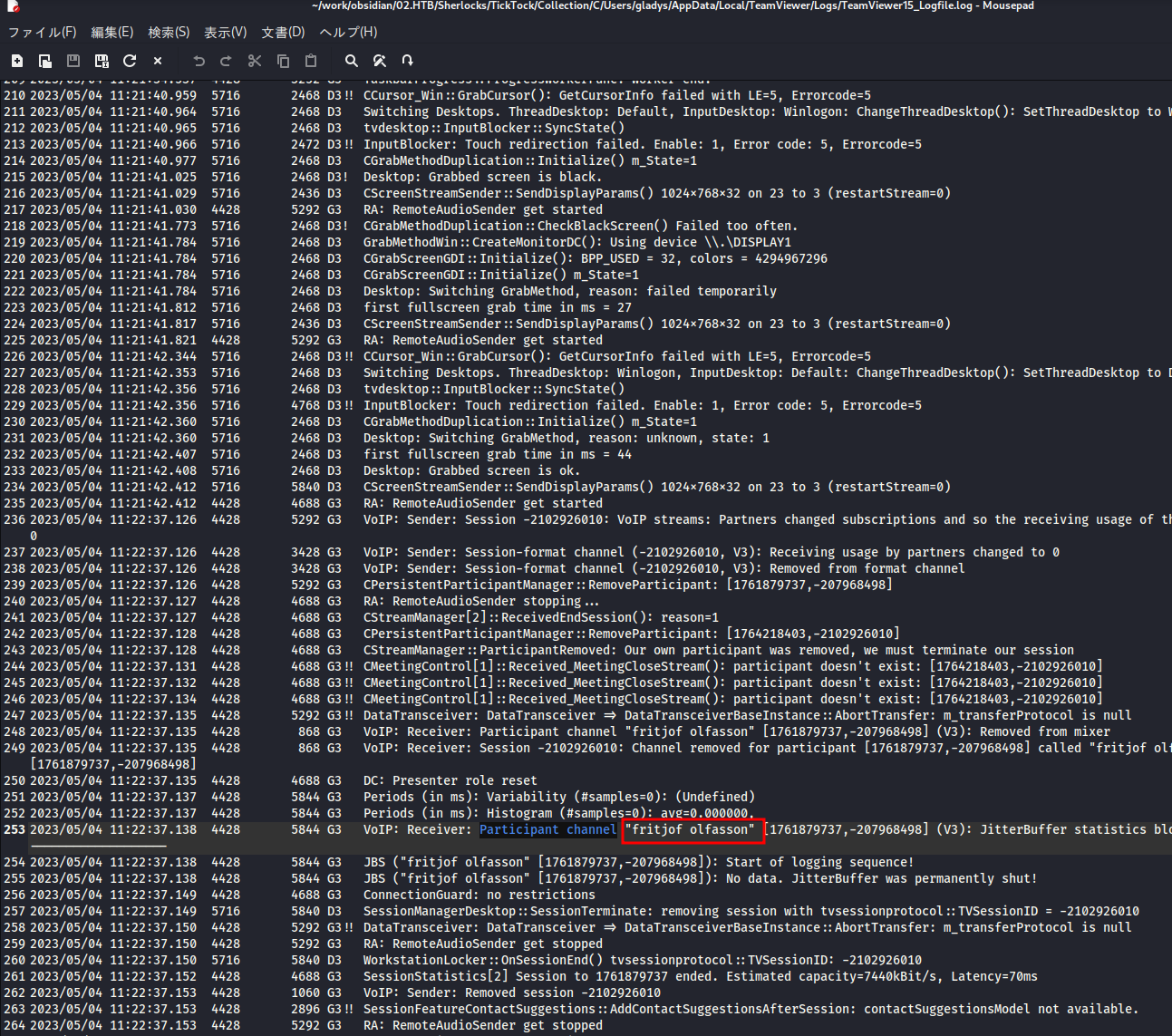
Analysis — The remote device/display name (fritjof olfasson) is a soft attribution artifact — likely attacker-chosen, but a pivot point for hunting the same name across other hosts and for the incident report. (MITRE ATT&CK T1219 — Remote Access Software.)
Q5. What IP address did the C2 connect back to?
Correlate the Merlin agent’s network activity (Sysmon / network artifacts) to find the callback endpoint.
Answer
1
52.56.142.81
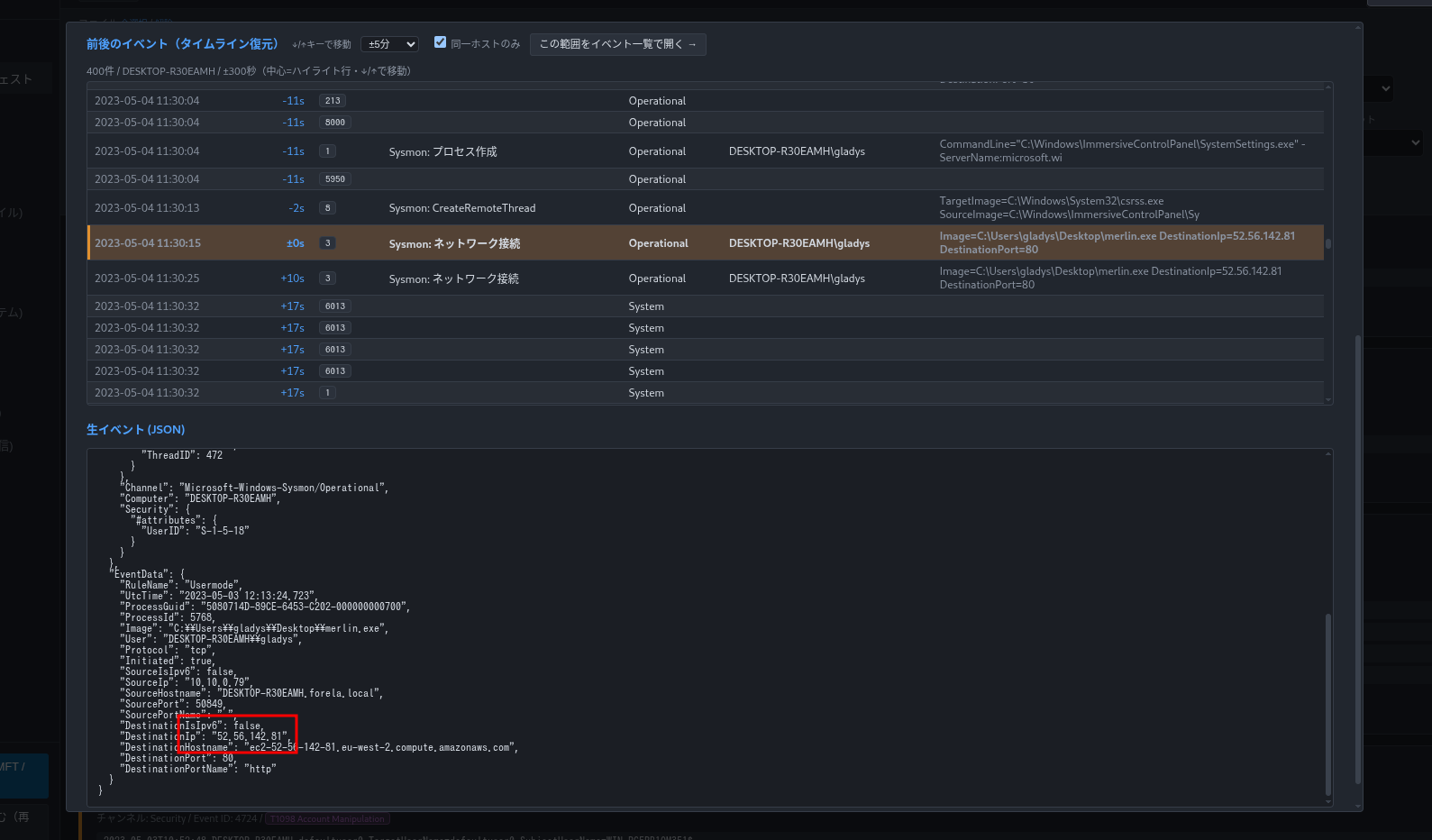
Analysis — 52.56.142.81 is the Merlin C2 server — a top-tier IOC for egress blocking and threat-intel pivoting. Merlin speaks HTTP/2, so the beacon blends into normal web traffic; the host-side artifact is what surfaces it. (MITRE ATT&CK T1071.001 — Application Layer Protocol: Web Protocols.)
Q6. What category did Windows Defender give to the C2 binary file?
Filter the Defender Operational log on Event ID 1116 (malware detected) — the threat name / category is in the event.
Answer
1
VirTool:Win32/Myrddin.D
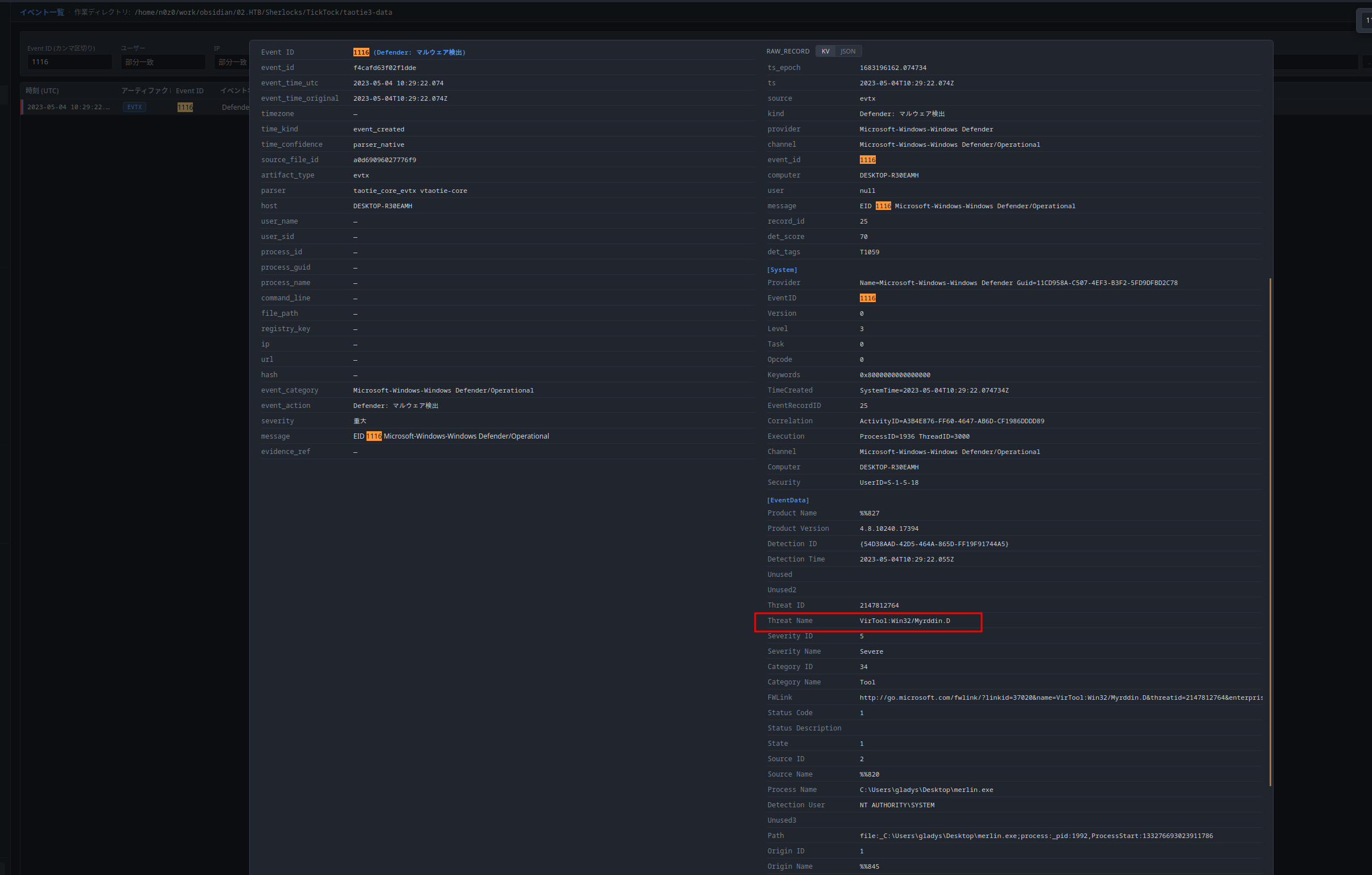
Analysis — VirTool:Win32/Myrddin.D is Microsoft’s family name for Merlin (Myrddin = the Welsh form of “Merlin”). Defender detected it but the attack continued — so detection ≠ prevention; always check whether a 1116 actually blocked or merely logged. (MITRE ATT&CK T1105 — Ingress Tool Transfer.)
Q7. What was the filename of the powershell script the attackers used to manipulate time?
System-time changes raise Security EID 4616. Pivot from those events to the PowerShell script that drove them — review the script artifacts, exclude Windows’ own and random temp .ps1 names, and the meaningfully-named script stands out.
Answer
1
Invoke-TimeWizard.ps1
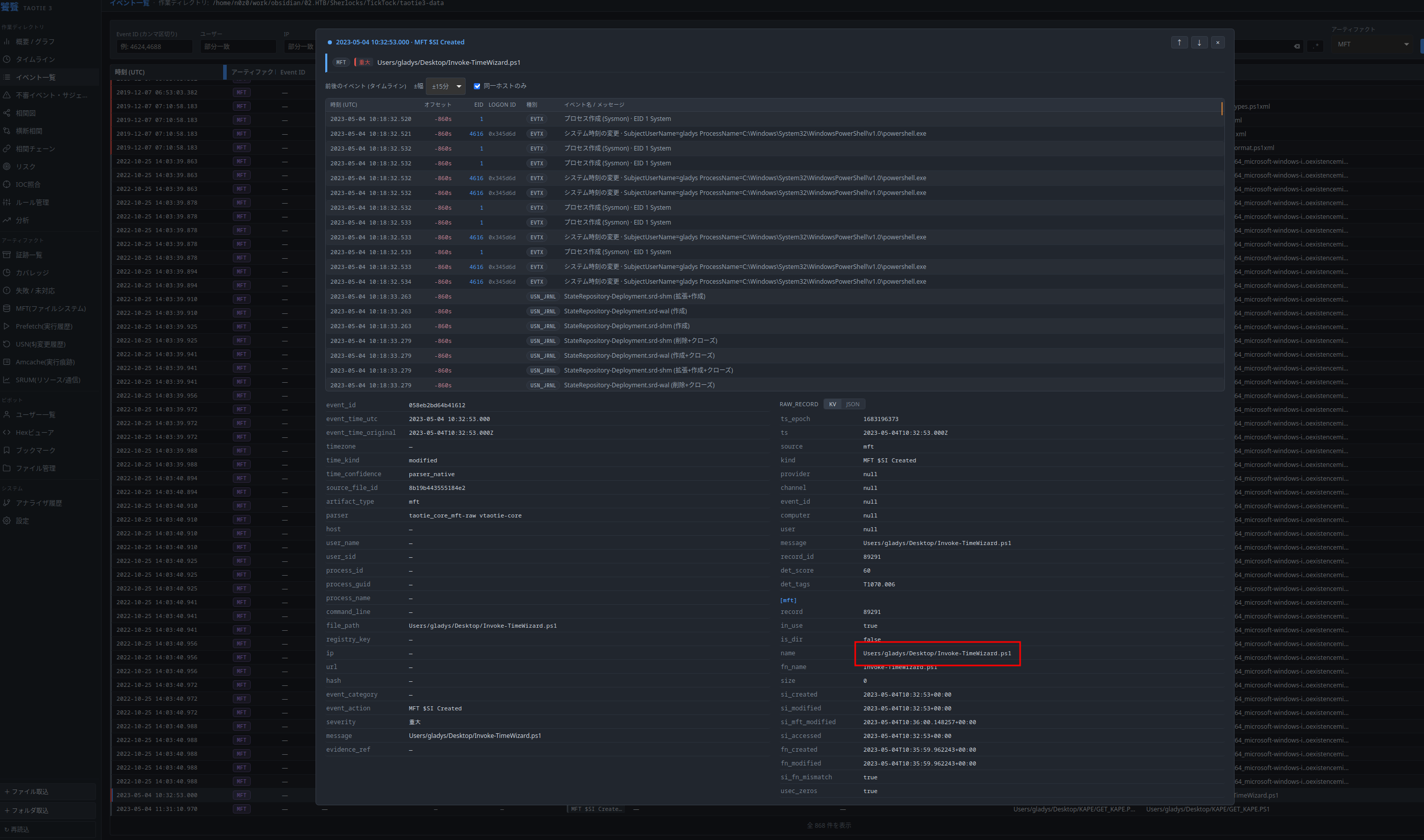
Analysis — Invoke-TimeWizard.ps1 repeatedly rolls the system clock to poison the timeline — an anti-forensic technique that breaks order-by-timestamp analysis. The defence is to triage by artifacts whose sequence is clock-independent (event record numbers, USN journal, $MFT). (MITRE ATT&CK T1070.006 — Indicator Removal: Timestomp / time manipulation, T1059.001 — PowerShell.)
Q8. What time did the initial access connection start? (UTC)
Read the connect timestamp of the inbound session from the TeamViewer log.
Answer
1
04/05/2023 11:35:27
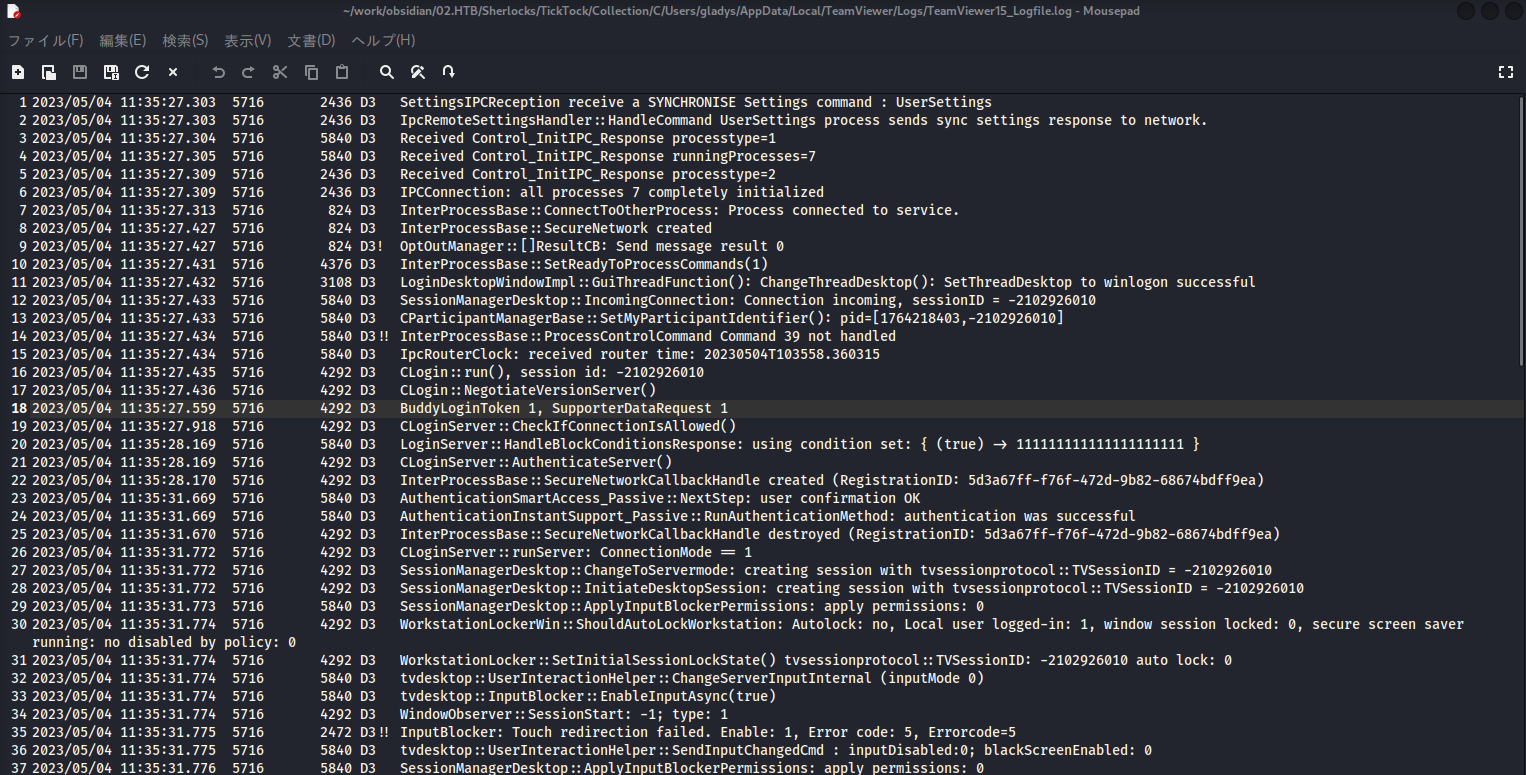
Analysis — Because the attacker tampered with the OS clock, Windows timestamps are unreliable — but TeamViewer writes its own timestamps in its log, independent of (and before) the tampering. That makes the TeamViewer connect time the trustworthy start of the intrusion. (MITRE ATT&CK T1219 — Remote Access Software.)
Q9. What is the SHA1 and SHA2 sum of the malicious binary?
Defender’s MPLog (C:\ProgramData\Microsoft\Windows Defender\Support\MPLog-*) records an SDN (Sample submission) line per scanned file, including its sha1= and sha2=. Find the merlin.exe entry and read both hashes.
Answer
1
ac688f1ba6d4b23899750b86521331d7f7ccfb69:42ec59f760d8b6a50bbc7187829f62c3b6b8e1b841164e7185f497eb7f3b4db9
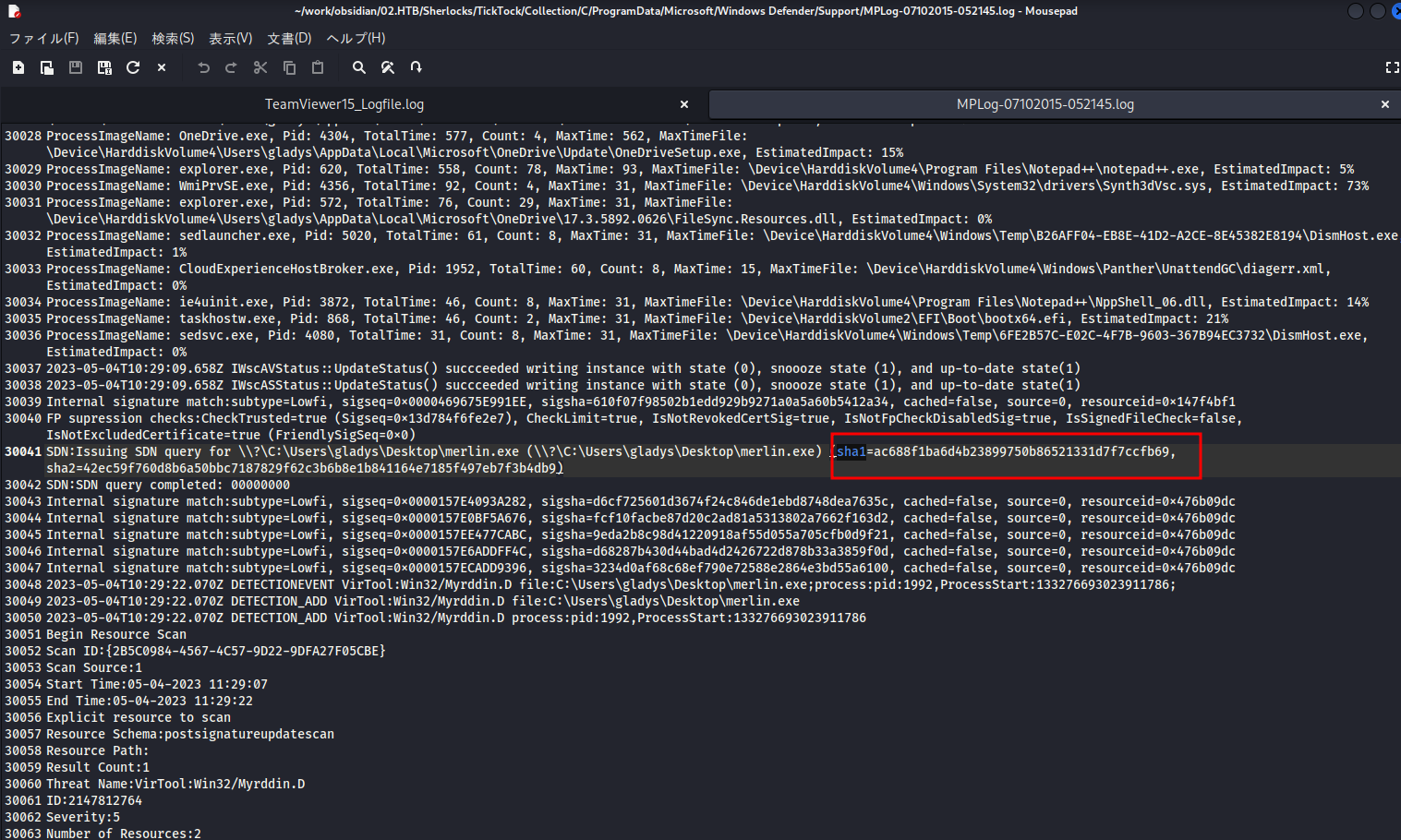
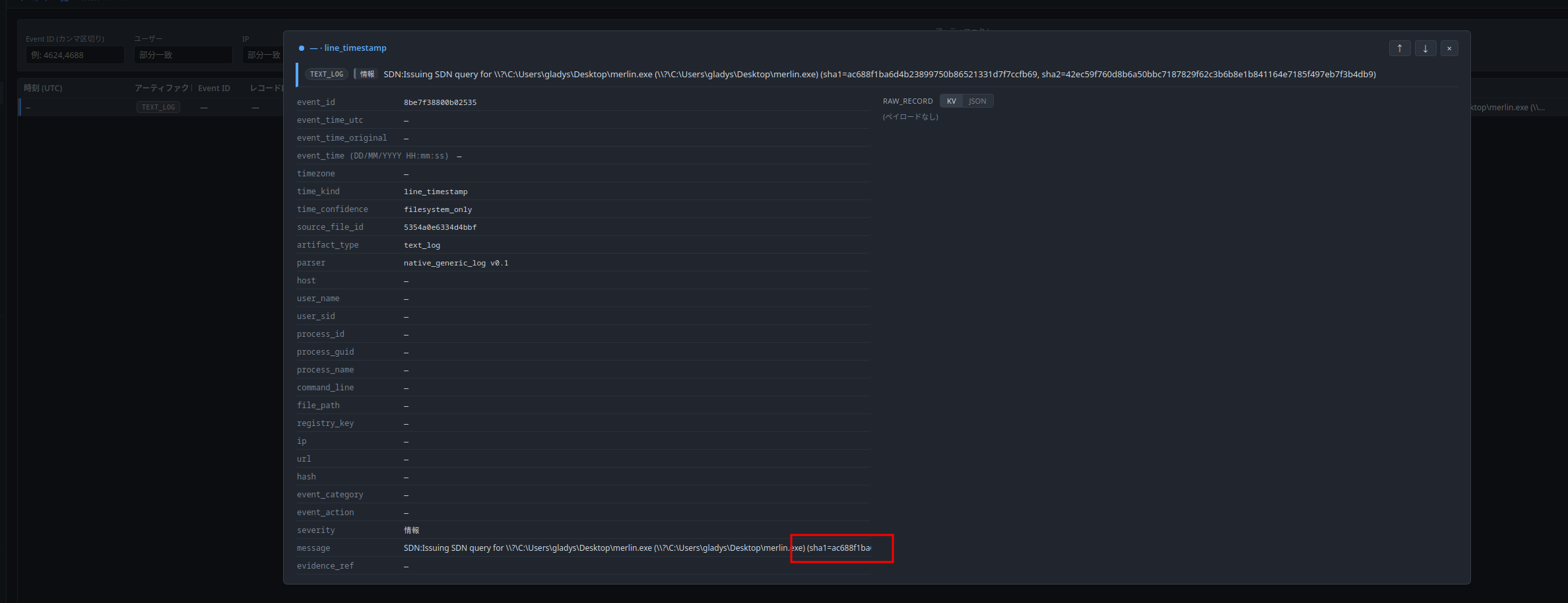
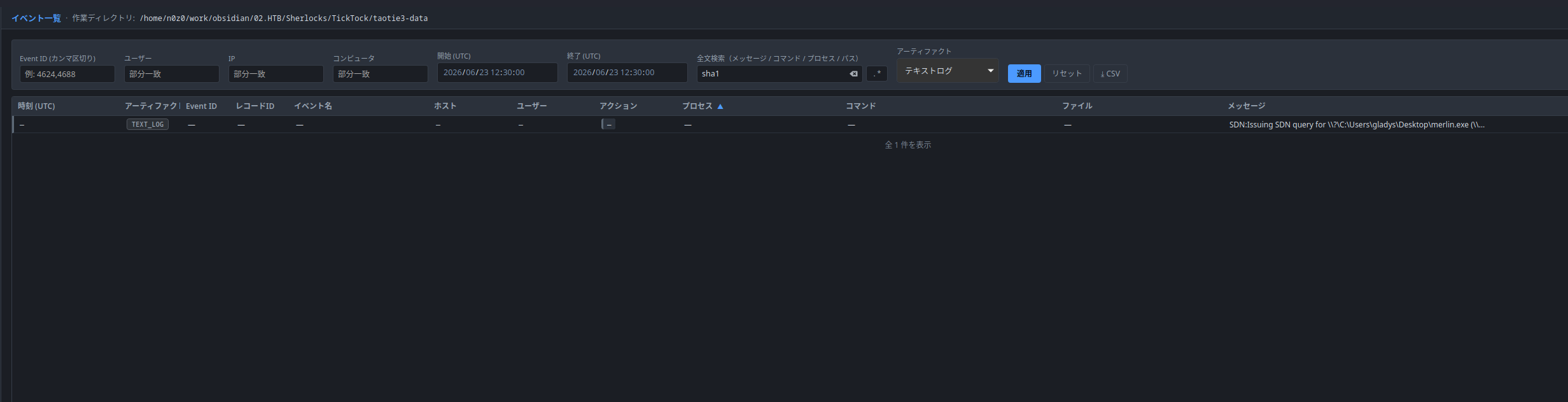
Analysis — Defender’s MPLog is an underrated DFIR goldmine: even after a binary is deleted, the SDN line preserves its path and hashes — SDN:Issuing SDN query for …\merlin.exe (sha1=…, sha2=…). Both sums enable VirusTotal / threat-intel pivoting without ever needing the file itself.
Q10. How many times did the powershell script change the time on the machine?
Every successful clock change emits a Security EID 4616. Filter on 4616 and scope the process to powershell.exe (the Invoke-TimeWizard.ps1 runs) — excluding legitimate time-sync sources — then count.
Answer
1
2371
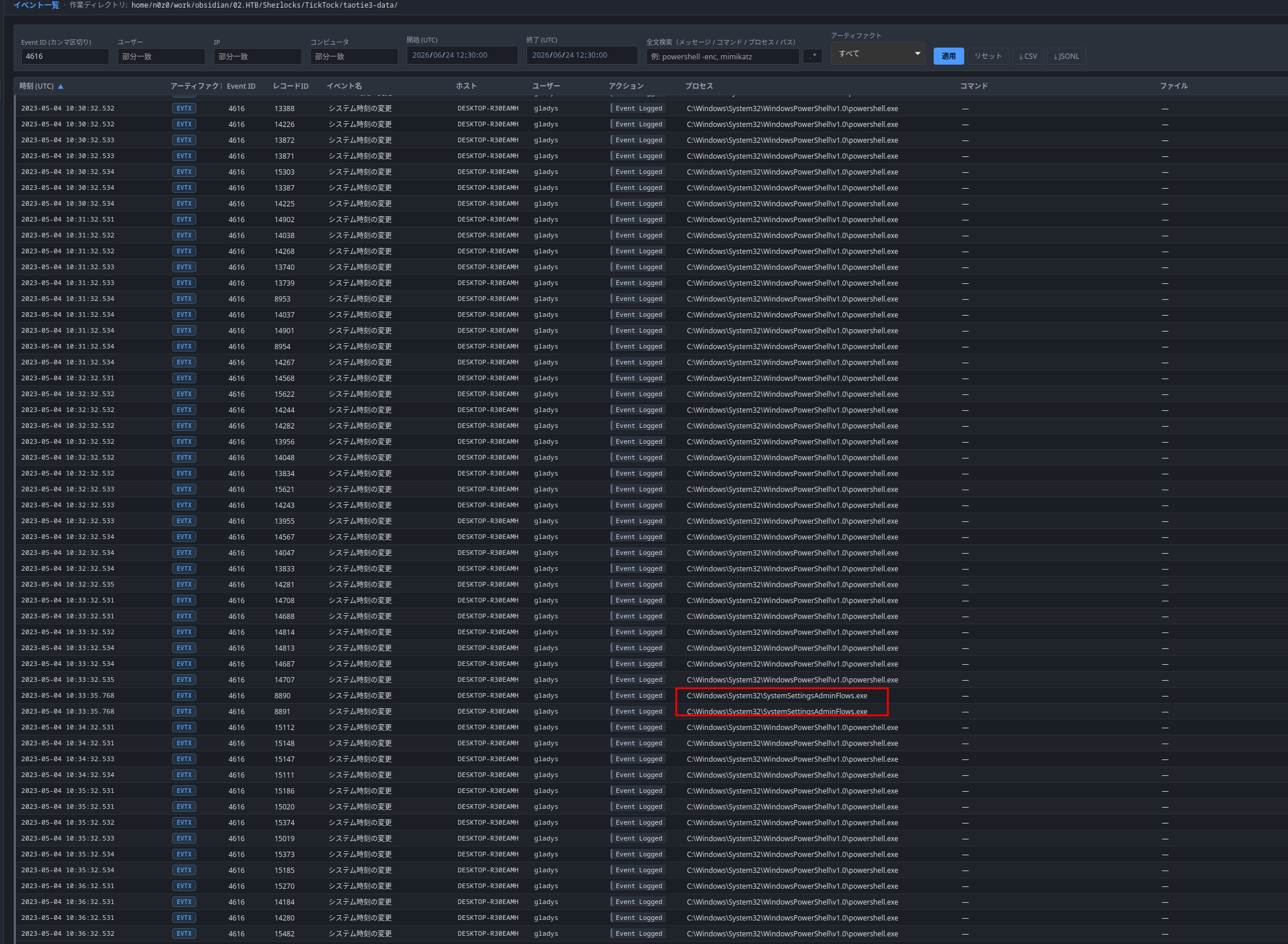
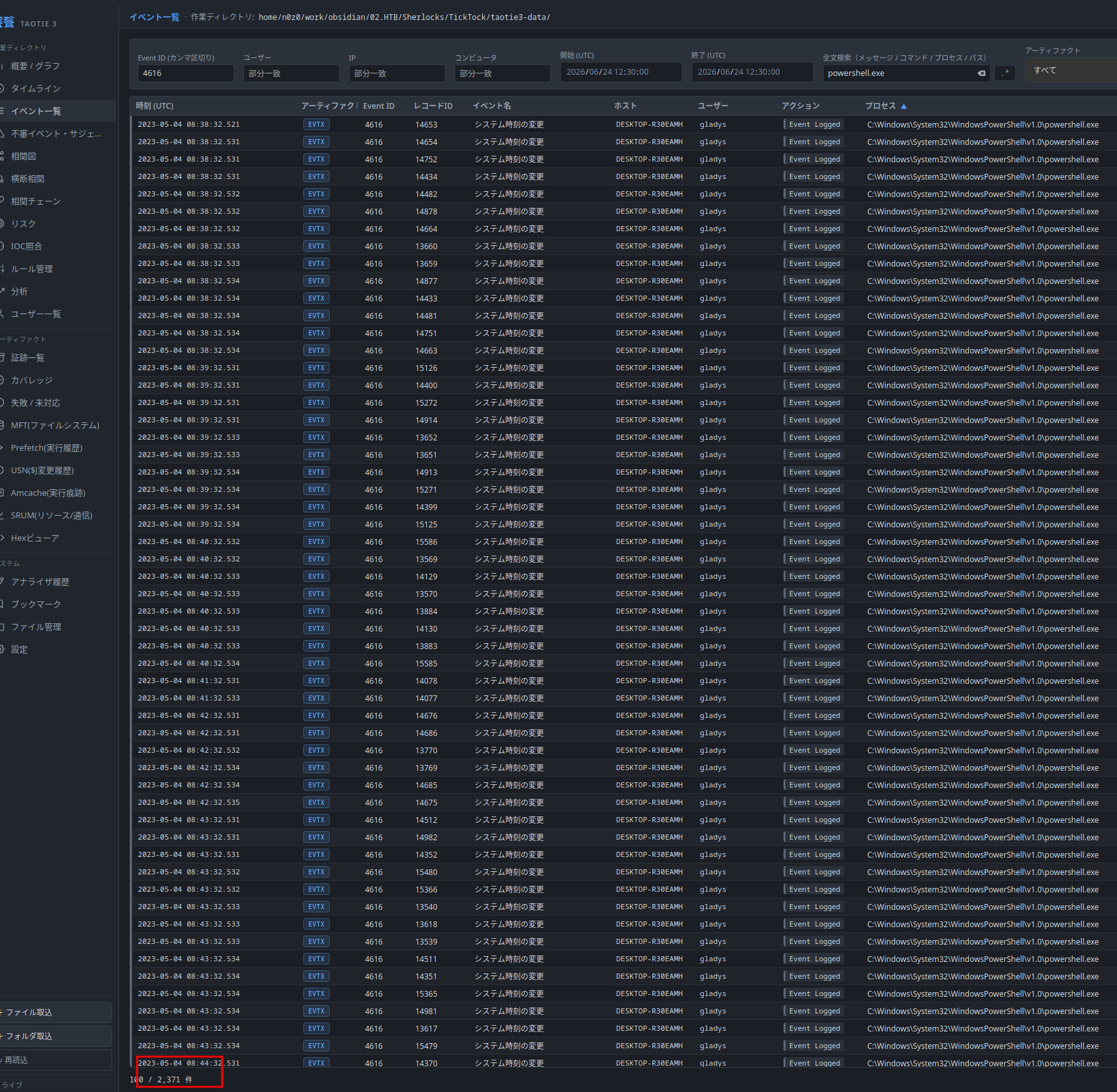
Analysis — 2371 time changes is the scale of the anti-forensic effort — but 4616 itself is the defender’s friend: scoping it to powershell.exe (vs the normal w32time / SYSTEM source) both proves the tampering and gives the exact count. The sheer volume is also a high-signal alert on its own.
Q11. What is the SID of the victim user?
The compromised account is gladys. Look up the local account’s SID in the SAM / registry artifact.
Answer
1
S-1-5-21-3720869868-2926106253-3446724670-1003
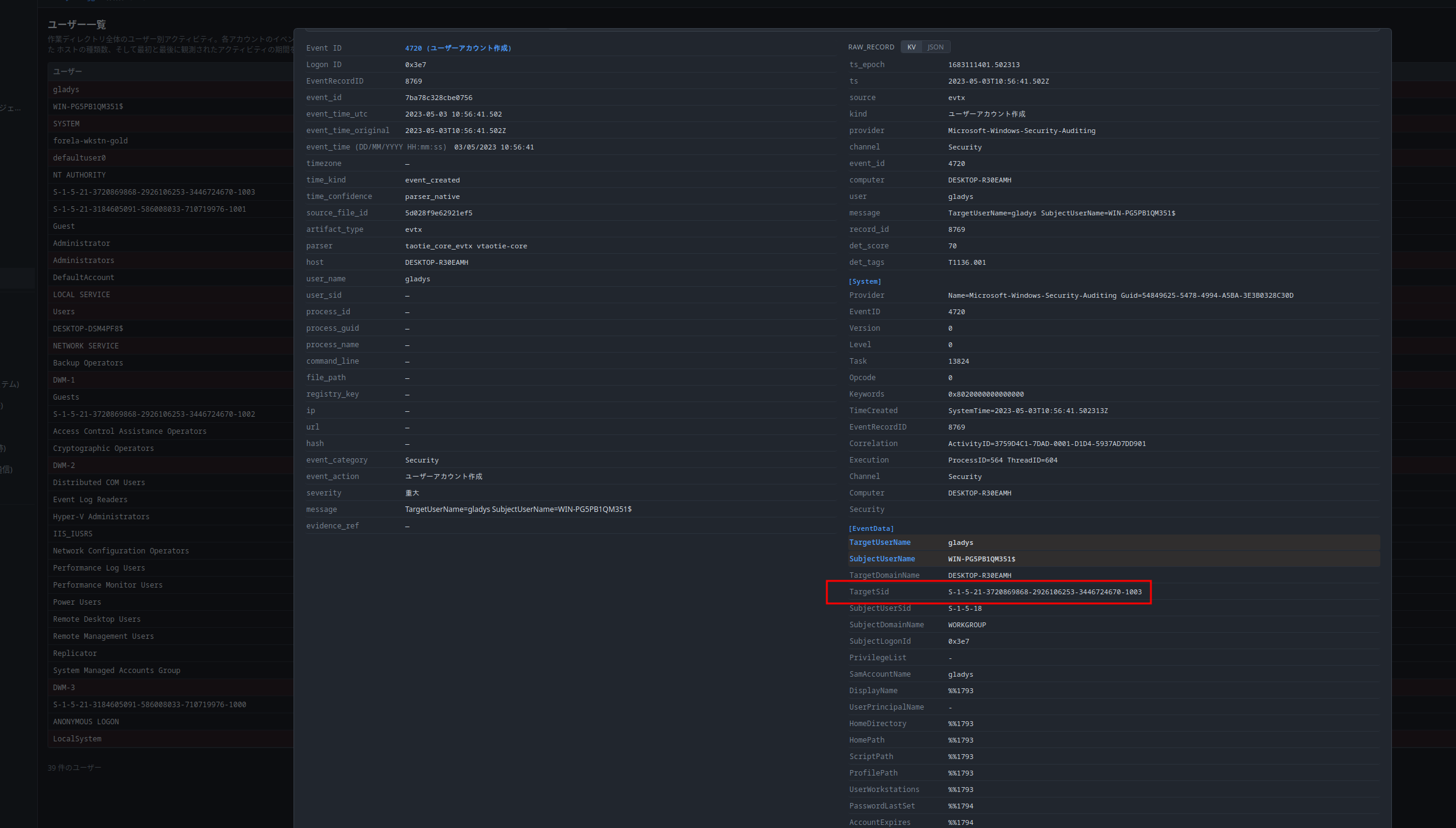
Analysis — The SID (…-1003, a normal non-admin local RID) uniquely identifies the principal even if renamed, and lets the threat-hunting team correlate gladys’s activity across logs and systems where only SIDs appear. (MITRE ATT&CK T1078 — Valid Accounts.)
Attack Timeline
| Time (UTC) | Stage | Evidence |
|---|---|---|
| 04/05/2023 11:35:27 | Initial Access | TeamViewer inbound session — “fritjof olfasson”, session -2102926010 — TeamViewer log |
| (post-access) | Execution / C2 | merlin.exe (Merlin C2) on gladys Desktop, beacons to 52.56.142.81 |
| (post-access) | Defense Evasion | Invoke-TimeWizard.ps1 rolls the system clock 2371× — Security EID 4616 |
| (post-access) | Impact (attempt) | BitLocker password reallylongpassword set on C: |
| (detection) | — | Defender flags it VirTool:Win32/Myrddin.D — EID 1116 / MPLog (SHA1/SHA2) |
flowchart TB
    subgraph EVID["Triage Evidence"]
        direction LR
        V1["① TeamViewer log"]
        V2["② merlin.exe (Merlin C2)"]
        V3["③ Defender EID 1116 / MPLog"]
        V4["④ Security EID 4616 — Invoke-TimeWizard.ps1"]
        V5["⑤ SAM — victim SID"]
    end

    subgraph IOCS["IOCs"]
        direction LR
        O1["merlin.exe<br/>SHA1 ac688f1ba6d4b23899750b86521331d7f7ccfb69<br/>SHA2 42ec59f760d8b6a50bbc7187829f62c3b6b8e1b841164e7185f497eb7f3b4db9"]
        O2["C2 52.56.142.81"]
        O3["Actor: fritjof olfasson / TeamViewer session -2102926010<br/>victim: gladys (SID S-1-5-21-3720869868-2926106253-3446724670-1003)"]
    end

    subgraph ATTACK["MITRE ATT&CK"]
        direction LR
        T1["T1219 Remote Access Software"]
        T2["T1105 Ingress Tool Transfer"]
        T3["T1071.001 C2"]
        T4["T1070.006 Time Manipulation"]
    end

    V1 ==> O3
    V5 ==> O3
    V2 ==> O1
    V2 ==> O2
    V3 ==> O1
    O3 -.-> T1
    O1 -.-> T2
    O2 -.-> T3
    V4 -.-> T4
Detection & Hardening (Blue Team)
- Alert on inbound TeamViewer / remote-access sessions to servers and sensitive endpoints — unmanaged RMM is a top initial-access vector. Allowlist approved tools only.
- Treat Defender EID 1116 as an incident, not a cleanup — a detection that doesn’t block (and is followed by more activity) means the threat is live.
- Alert on Security EID 4616 from non-
w32time/ non-SYSTEM processes (especiallypowershell.exe) — legitimate apps almost never set the clock; a burst of4616is a strong anti-forensics signal. - Collect Defender MPLog (
…\Windows Defender\Support\MPLog-*) in triage — it preserves paths and SHA1/SHA2 of scanned files even after deletion. - Monitor BitLocker /
manage-bdeprotector changes on system drives — an unexpected password protector can be a ransomware precursor.
Key Takeaways
- A vendor app log (TeamViewer) gave the trustworthy who / when of initial access — independent of the tampered OS clock.
- Defender MPLog yielded the binary’s SHA1 / SHA2 without the file, and EID 1116 the family name (
VirTool:Win32/Myrddin.D= Merlin). - Anti-forensic time manipulation (
Invoke-TimeWizard.ps1, 2371× via EID 4616) is itself detectable — scope4616topowershell.exeto both prove and count it. - When the clock can’t be trusted, cross-source correlation beats timeline-by-timestamp.
References
- HackTheBox Sherlock: TickTock — https://app.hackthebox.com/sherlocks
- Merlin C2 — https://github.com/Ne0nd0g/merlin
- Microsoft — 4616(S): The system time was changed — https://learn.microsoft.com/windows/security/threat-protection/auditing/event-4616
- Windows Defender MPLog (DFIR value) — https://www.crowdstrike.com/blog/how-to-use-microsoft-protection-logging-for-forensic-investigations/
- MITRE ATT&CK: T1219 (Remote Access Software), T1105 (Ingress Tool Transfer), T1071.001 (Web C2), T1070.006 (Time manipulation), T1486 (Data Encrypted for Impact)